HTS Classification Automation Built Into Your Entry Workflow
Cervo AI classifies goods at the 10-digit HTS level, stacks Chapter 99 duties automatically, and feeds the results straight into your 7501 entry summary. No standalone lookup tools. No tab switching. No starting from scratch on every entry.
Why HTS Classification Is So Difficult to Get Right
The Harmonized Tariff Schedule contains over 17,000 subheadings. Selecting the correct 10-digit code requires understanding the product's material composition, intended use, and how CBP interprets the applicable heading notes. Get it wrong and you face duty underpayments, CF-28 requests, penalties, or overpayments that cost your importer money.
The tariff environment has made classification significantly harder in recent years. Chapter 99 provisions now layer additional duties on top of the base rate - Section 301 on Chinese-origin goods, Section 232 on steel and aluminum, IEEPA tariffs, and AD/CVD orders. A single entry line may require four or five duty layers stacked in the correct sequence. The rates and exclusions change frequently, sometimes with days of notice.
Most brokerages handle this with institutional knowledge. Senior entry writers remember which codes apply to which products for which importers. But that knowledge is fragile. When an experienced classifier leaves, the brokerage loses years of accumulated expertise. New hires take months to develop the same judgment, and in the meantime, error rates climb.
Standalone HTS code software compounds the problem by treating every classification as a new event. There is no memory of prior decisions, no connection to the entry being built, and no awareness of the Chapter 99 provisions that apply. Your entry writer classifies in one tool, then manually transfers the result to another - a workflow that is slow, error-prone, and disconnected.
How Cervo Handles Automated Tariff Classification
Cervo does not offer HTS classification as a standalone lookup. Classification happens inside the customs entry workflow, connected to the documents, the importer's history, and the entry being built.
Analyze Product Data
Cervo extracts product descriptions, material composition, and intended use from commercial invoices and packing lists. This data feeds directly into the classification engine - no manual retyping.
Check the Parts Library
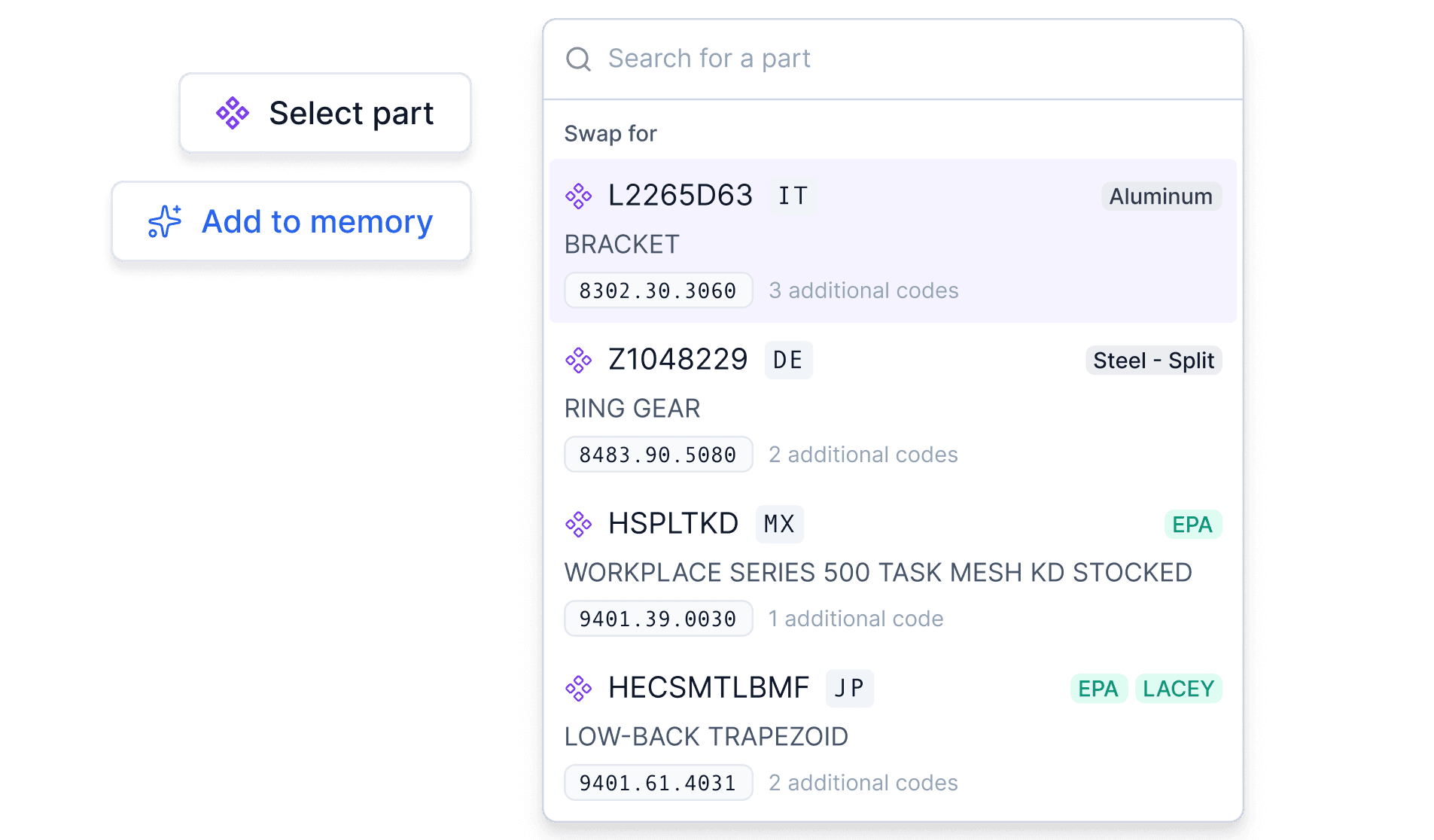
Before classifying from scratch, Cervo checks the parts library for previously established classifications. Returning products auto-populate with their validated HTS code, duty rates, and compliance data. Fuzzy matching handles part number variations across invoices.
Classify at the 10-Digit Level
For new products, Cervo's AI classifies at the full 10-digit HTS level using the product data, tariff heading notes, and CBP interpretive guidance. Each classification includes a confidence score so your team knows which items need human review. Before proceeding, Cervo validates every HTS code in real time against USITC to confirm it is a valid, active code - invalid codes are flagged and blocked so they never reach the entry.
Stack Chapter 99 Duties
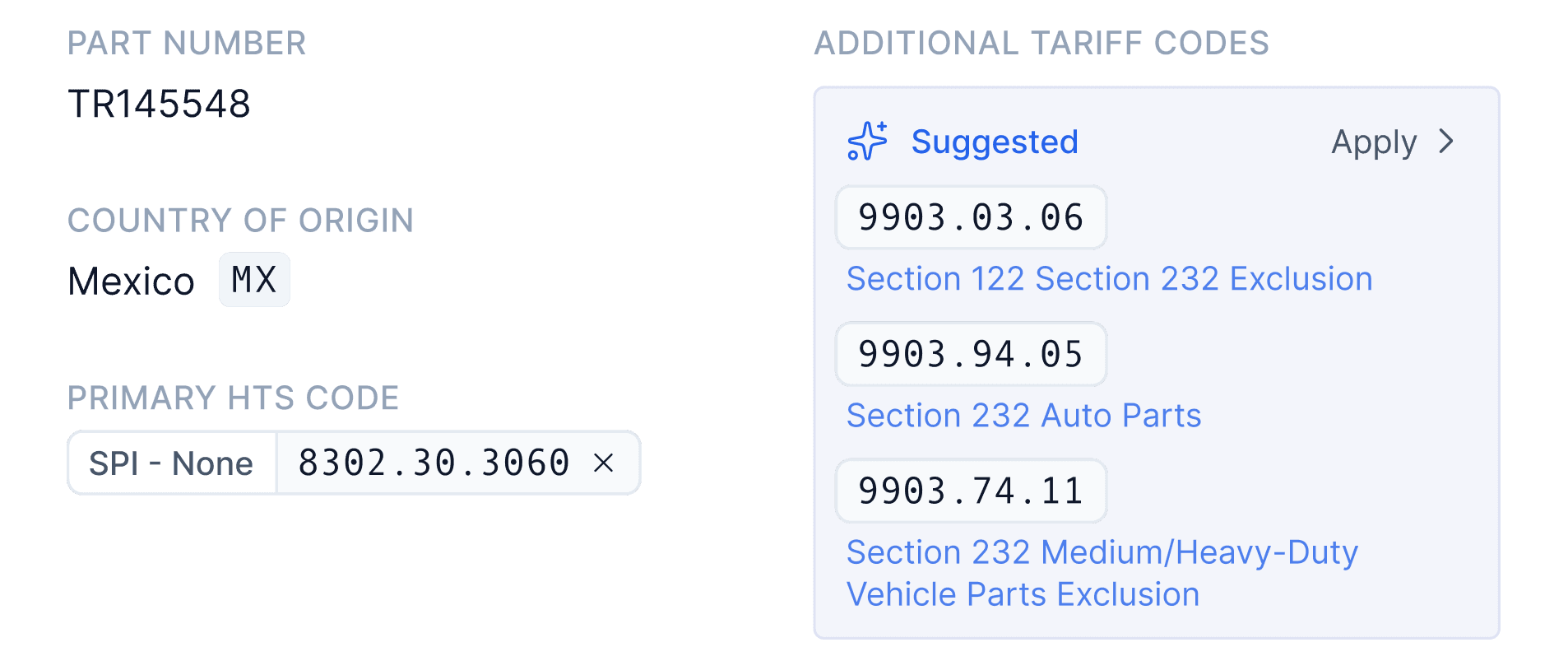
The correct Chapter 99 subheadings are automatically applied on top of the base rate - Section 301, Section 232, IEEPA, AD/CVD, and any applicable exclusions. The stacking sequence and rates reflect the current tariff database.
Feed Into the 7501 Entry
Classification results flow directly into the 7501 entry summary being built. No tab switching, no copy-pasting, no standalone tools. The classified line items are ready for review and submission.
Chapter 99 Stacking - Getting Every Duty Layer Right
Chapter 99 is where most classification errors become costly. A product classified under a base HTS code may also be subject to Section 301 duties (up to 25% on Chinese-origin goods), Section 232 tariffs (25% on steel, 10% on aluminum), IEEPA tariffs, and antidumping or countervailing duties. Each of these provisions has its own Chapter 99 subheading, its own rate, and its own exclusion logic.
Cervo's tariff engine handles the full stacking sequence automatically. When a product is classified, the system identifies every applicable Chapter 99 provision based on the HTS code, country of origin, and current trade policy. Exclusions are checked. Rates are pulled from a tariff database that is maintained in real time using AI interpretation of CBP guidance, reviewed by licensed customs brokers. When the country of origin changes on a line item, Cervo automatically recommends the correct Chapter 99 codes for the new origin and ensures they are applied in the proper stacking order.
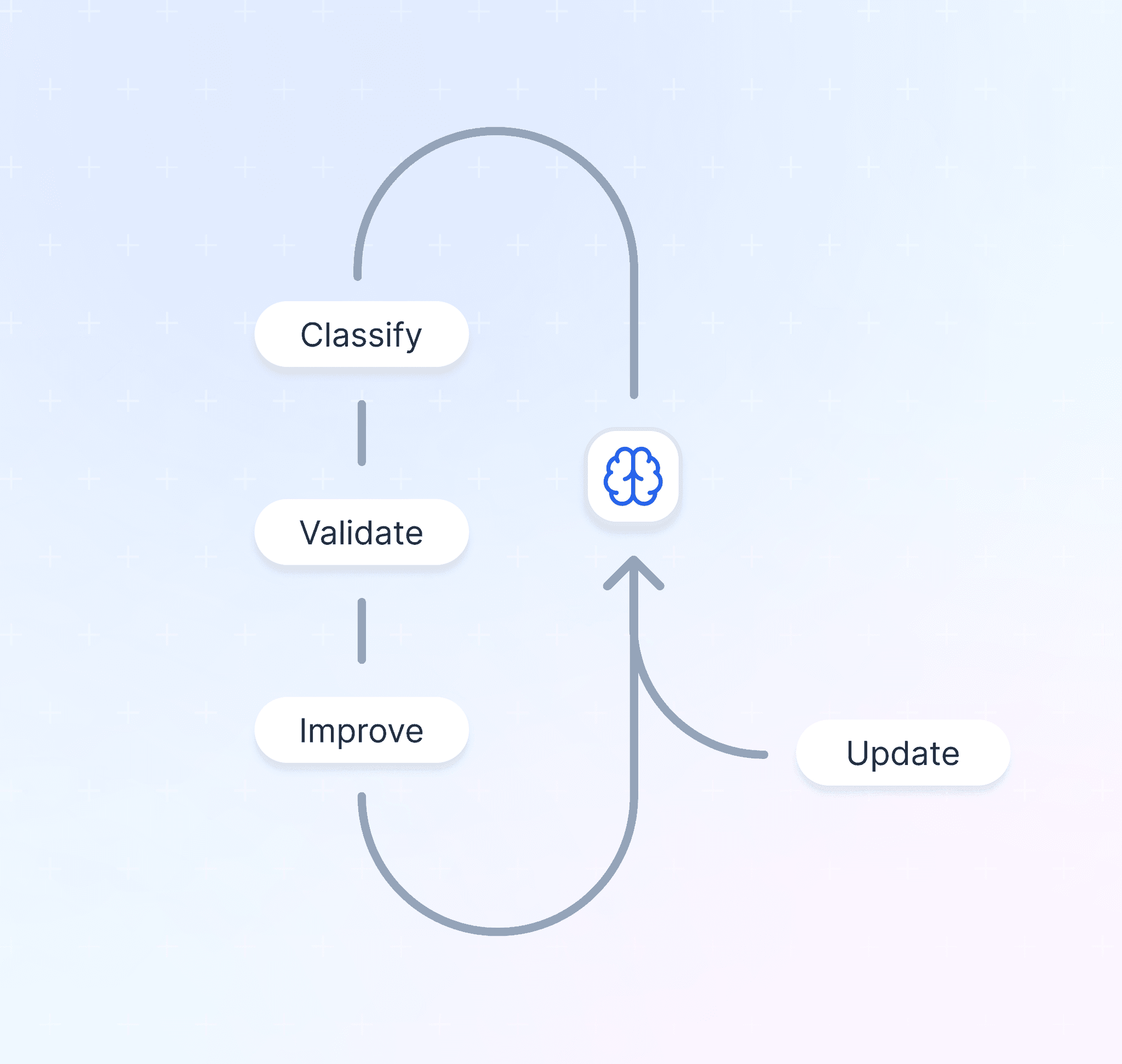
This matters because the stacking rules change. New tariff actions are announced, exclusions expire, rates are modified - sometimes with minimal lead time. A tariff database that was accurate last month may produce wrong results today. Cervo's real-time update process ensures your entries reflect current rates, not stale data.
For goods subject to steel or aluminum splits, the Chapter 99 stacking integrates with the split calculation. The steel portion receives its Section 232 code and rate, while the non-steel portion receives any other applicable Chapter 99 provisions. The entire calculation happens in seconds. See also tariff and duty tooling on the platform.
HTS Classification Capabilities
10-Digit Classification
Cervo classifies at the full 10-digit HTS level using product descriptions, material composition, intended use, and tariff heading notes. Not a 6-digit suggestion - the actual code your entry requires. Every code is validated against USITC in real time to ensure it is active and valid before it reaches the entry.
Chapter 99 Stacking
Section 301, Section 232, IEEPA, and AD/CVD duties are automatically layered on top of the base rate. Exclusions are checked and the stacking sequence follows current CBP requirements.
Parts Library Integration
Previously classified products are stored in the parts library with their validated HTS codes and duty rates. Returning products auto-populate - no redundant classification work.
Real-Time Tariff Updates
The tariff database is maintained using AI interpretation of CBP guidance, reviewed by licensed customs brokers. Your entries always reflect current rates, not last month's data.
Confidence Scoring
Every classification includes a confidence score and reasoning. High-confidence items move through quickly. Low-confidence items are flagged for human review with the AI's rationale visible.
Integrated Into Entry Workflow
Classification feeds directly into the 7501 entry summary. No standalone lookup tools, no tab switching, no manual data transfer between systems.
Standalone HTS Lookup Tools vs. Integrated Classification
| Topic | Standalone HTS Lookup Tools | Cervo AI |
|---|---|---|
| Classification memory | Every lookup is a new event - no recall of prior decisions | Parts library stores validated classifications for reuse |
| Chapter 99 stacking | Manual or limited - user must identify applicable provisions | Automatic stacking of Section 301, 232, IEEPA, AD/CVD |
| Tariff data freshness | Periodic updates, often lagging behind CBP changes | Real-time updates with AI interpretation and broker review |
| Entry integration | Copy-paste results into a separate entry system | Classification feeds directly into the 7501 draft |
| Institutional knowledge | Lost when the user closes the tab | Preserved in parts library and Agent Studio rules |
| Confidence visibility | Single suggested code with no rationale | Confidence scores and reasoning on every classification |
A top-3 global freight forwarder achieved an 88% reduction in entry processing time after switching from standalone classification tools to Cervo's integrated workflow.
What Integrated Classification Delivers
Beyond Classification Accuracy
- Fewer CF-28 requests. Consistent, well-documented classifications reduce CBP inquiries about your tariff decisions. See our resources for compliance guides.
- Preserved institutional knowledge. The parts library captures classification expertise that would otherwise leave when staff turns over.
- Faster entry completion. Classification is no longer a bottleneck - it happens as part of the entry build, not as a separate step.
- Correct duty calculations. Automated Chapter 99 stacking eliminates the manual errors that lead to underpayments or overpayments.
Frequently Asked Questions

See HTS Classification Automation in Action
Related Solutions
Automate 7501 Entry Processing
AI-powered extraction and preparation of CBP Form 7501 customs entries, from commercial invoice to filing-ready entry summary.
Tariff Simulator
Estimate duties, tariffs, and landed cost with HTS-level precision and Chapter 99 context.
Document AI
Extract structured data from any customs document format with confidence scoring and validation.