
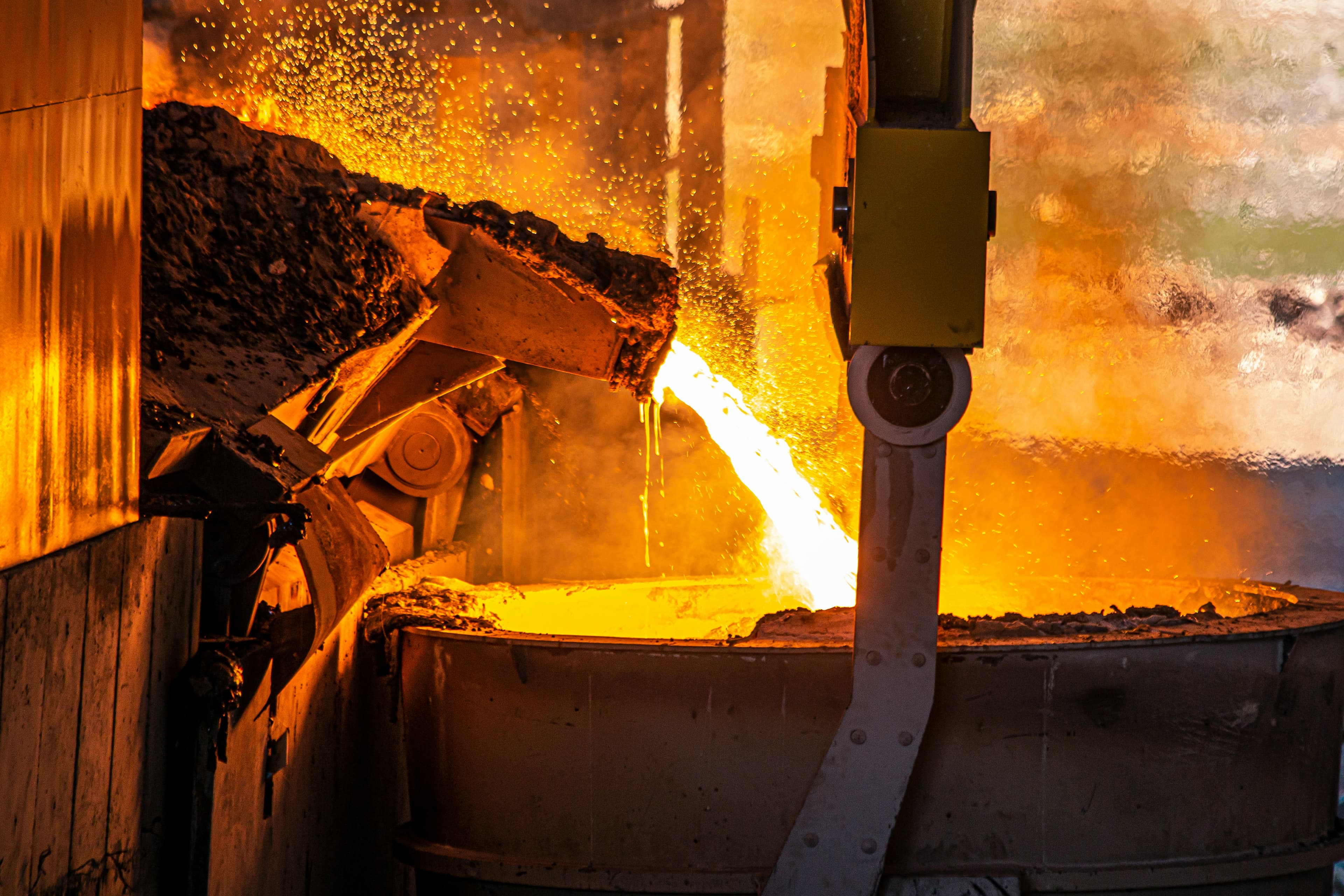
Five Tariff Tiers, Three Metals, One Massive Compliance Headache: What Brokers Need to Know About the New Section 232 Proclamation

If you're a customs broker, freight forwarder, or importer dealing in anything that touches steel, aluminum, or copper - and in 2026, what doesn't - you just got a new layer of complexity dropped on your desk.
On April 2, 2026, President Trump signed a new Proclamation overhauling how Section 232 tariffs are assessed on steel, aluminum, and copper imports. The headline number hasn't changed - 50% is still the ceiling - but the structure underneath it has been completely redesigned. And for anyone responsible for classifying products, calculating duties, and filing entries, the structure is what matters.
Here's what changed, why it's significant, and what it means for your operations.
The New Tiered Framework
The proclamation replaces the previous flat-rate approach with a five-tier tariff structure based on the metal composition and origin of the imported product. Each tier carries a different duty rate, and each requires a different set of determinations at the time of entry.
Tier 1 - 50% on full value. Articles made entirely or almost entirely of steel, aluminum, or copper. Think steel coils, aluminum sheet, copper cathode - primary metal products where the material is the product. This is the rate that's been in effect since June 2025, now codified under the new framework.
Tier 2 - 25% on full value. Derivative articles "substantially" made of steel, aluminum, or copper. This is where things get interesting for brokers. The proclamation distinguishes between a primary metal article and a derivative product that's heavily composed of one of these metals - say, a steel pipe fitting or an aluminum heat exchanger. The duty rate drops, but you now need to make a defensible determination about whether your product is "entirely" vs. "substantially" composed of a covered metal.
Tier 3 - 15% on full value (through 2027). Certain metal-intensive industrial equipment and electrical grid equipment. This is a temporary carve-out designed to support the domestic infrastructure buildout. If you're importing transformers, switchgear, or heavy industrial machinery, this rate is available - but it sunsets, and the classification questions around what qualifies as "metal-intensive industrial equipment" are going to generate significant broker-importer friction.
Tier 4 - 10% on full value. Products manufactured abroad but made entirely with American-origin steel, aluminum, or copper. This is a new concept - the metal itself gets a passport. If you can demonstrate that the raw material was sourced from U.S. producers, exported for manufacturing, and re-imported as a finished product, you get a reduced rate. The documentation burden here is substantial. You'll need to trace metal origin through an international supply chain and prove it at entry.
Tier 5 - 0% (exempt). Products containing 15% or less steel, aluminum, or copper by value are no longer subject to Section 232 metals tariffs. This is a relief valve for products where metal is a minor component - consumer electronics, certain automotive parts, mixed-material goods. But it also means brokers need to know the composition percentage of every product they file, and that's not always straightforward.
Why This Matters More Than It Looks
On paper, a tiered structure seems like a rational simplification. In practice, it creates five classification decisions where there used to be one.
Under the previous framework, the question was binary: is this product subject to Section 232, and if so, what's the rate? Now, the question is: which tier does this product fall into, what's the composition, where was the metal sourced, is there a sunset provision, and can you document all of that at the speed your clients expect?
And this doesn't exist in a vacuum. Section 232 metals tariffs stack on top of Section 301 tariffs on Chinese goods, IEEPA tariffs, AD/CVD duties, and the reciprocal tariff regime. A single entry for a steel-heavy product imported from a country subject to multiple programs could require the broker to calculate and apply duties from four or five overlapping regimes - each with its own rules, rates, and exceptions.
The margin for error isn't slim. It's basically nonexistent.
The Compliance Math Is Getting Worse
Let's walk through a realistic scenario.
A U.S. importer brings in fabricated steel components from Vietnam. The product is substantially made of steel (Tier 2 - 25% Section 232), but Vietnam is also subject to reciprocal tariffs and potentially AD/CVD on certain steel products. The broker needs to:
Determine the correct HTS classification
Calculate the Section 232 tier based on metal composition
Apply any applicable AD/CVD rates
Layer on reciprocal tariffs
Check for any IEEPA applicability
Validate that the declared value reflects "full value" as defined in the new proclamation - not an artificially low foreign price
File the entry correctly in ABI before the deadline
Miss any one of those steps, and the importer is looking at either an overpayment that eats their margin or an underpayment that triggers a penalty. Neither outcome builds trust.
Now multiply that by dozens or hundreds of entries per week, across multiple importers, each with different product mixes and origin countries.
This is the operating environment for customs brokers in 2026.
The Broader Context
The proclamation is part of a multi-year escalation of metals tariffs that has fundamentally reshaped the landscape for brokers and importers.
The trajectory is worth understanding. In February 2025, the administration eliminated hundreds of thousands of product-specific exceptions and country-specific exemptions that had accumulated over the prior four years. In June 2025, the base rate jumped to 50%. In July 2025, copper was added to the program at the same 50% rate. And now, in April 2026, the structure has been rebuilt around composition-based tiers with origin tracing requirements.
Each move has added complexity. And each move has made the broker's job harder.
The administration frames this as a national security imperative - and the numbers support the investment thesis. The U.S. became the third-largest steel producing nation in 2025. Over 4 million tons of new steelmaking capacity is expected to come online in the next two years. New aluminum and copper smelting facilities are being built for the first time in decades.
None of that changes the fact that the compliance burden has shifted almost entirely onto the brokerage community. Someone has to operationalize these tiers, trace metal origins, calculate stacked duties, and file accurate entries at scale. Right now, that someone is you.
How Cervo AI Helps
This is the exact problem Cervo AI was built to solve.
Cervo automates the most complex, error-prone parts of the customs entry workflow - the parts that are now five times more complicated than they were six months ago.
Composition-based classification. The new tiered framework requires brokers to determine the metal composition of every product subject to Section 232. Cervo reads the product data, maps it to the correct HTS code, and determines which tier applies - primary article, derivative, grid equipment, U.S.-origin metal, or exempt - automatically.
Tariff stacking across programs. Section 232 doesn't exist in isolation. Cervo calculates duties across all applicable programs - Section 232, Section 301, IEEPA, AD/CVD, reciprocal tariffs - and stacks them correctly for each entry. No manual cross-referencing. No spreadsheet formulas that break when a new rate kicks in.
Steel split handling. Steel entries have always been among the most labor-intensive filings in customs brokerage. The new tiered structure makes them worse. Cervo handles steel splits - breaking down entries by composition, origin, and applicable duty program - in a fraction of the time it takes to do manually.
PGA screening. For products that trigger Partner Government Agency requirements on top of tariff obligations, Cervo screens and flags them at the point of entry, so nothing slips through.
ABI-ready filing. Everything Cervo produces is formatted for direct submission through ABI. The output isn't a recommendation or a report - it's a filing-ready entry.
The tariff environment is not getting simpler. Every proclamation, every rate change, every new tier adds another branch to the decision tree that brokers have to navigate on every single entry. The brokers who automate that complexity are the ones who'll scale through it. The ones who don't will spend their time doing math instead of growing their book.
Cervo AI automates U.S. customs brokerage workflows - from HTS classification and tariff stacking to steel splits, PGA screening, and ABI-ready entry filing. If your team is spending hours on entries that should take minutes, we should talk.
